Complete Spine And Orthopaedic Care
Call Us: +91 7208005190 / 91 / 92
Complete Spine And Orthopaedic Care
Call Us: +91 7208005190 / 91 / 92
in Mumbai
Children are naturally active, and falls, sports injuries, and accidents can sometimes lead to injuries affecting the bones, joints, muscles, and growth areas. While minor injuries may heal with basic care, some childhood injuries require timely assessment by a paediatric orthopaedic specialist.
Paediatric trauma care focuses on the evaluation and treatment of orthopaedic injuries in children, including fractures, dislocations, sports injuries, and growth plate injuries. Since children’s bones are still developing, proper diagnosis and appropriate treatment can be important for supporting healthy healing and recovery.
At Alpha Ortho, children with orthopaedic injuries are evaluated based on their age, injury type, symptoms, activity level, and overall bone and joint health. Our approach focuses on careful assessment, clear communication with parents, and an individualised treatment plan for each child.
Paediatric trauma refers to injuries affecting a child’s bones, joints, ligaments, or muscles, usually as a result of falls, sports activities, play-related accidents, or other physical impact. This is different from adult orthopaedic trauma in an important way: children’s bones are still developing, and many have areas called growth plates near the ends of long bones. These growth plates are softer than the surrounding bone and can sometimes be involved in an injury, which is why paediatric injuries often need a specialist’s eye rather than a general assessment.
Common paediatric trauma cases range from simple, non-displaced fractures that heal well with a cast, to more complex injuries involving joints or growth areas that require closer monitoring. The right diagnosis, followed by an appropriate treatment plan, plays an important role in how well a child recovers and returns to their normal activities.
Children can experience a range of orthopaedic injuries depending on their age, activity levels, and the nature of the accident. Some of the injuries commonly assessed and managed include:
Children’s Fractures : Bone breaks in children, commonly caused by falls, accidents, or sports activities.
Arm and Wrist Fractures : Common childhood injuries, often caused by falling onto an outstretched hand.
Elbow Fractures : Injuries around the elbow joint that require careful evaluation due to nearby growth centres.
Leg and Ankle Fractures : Lower-limb injuries commonly associated with sports, play, falls, or accidents.
Growth Plate Injuries : Injuries affecting the growing areas of bones that require specialised care during childhood development.
Sports Injuries : Strains, sprains, and fractures resulting from physical activities or organised sports.
Joint Dislocations : When a bone is displaced from its normal position within a joint
Injury-Related Bone and Joint Problems : Other orthopaedic conditions caused by trauma that may require ongoing evaluation and care.
Each of these injuries can vary significantly in severity, and the exact nature of the injury can only be confirmed through a proper clinical evaluation.
It isn’t always easy to tell whether an injury is minor or something that needs specialist attention. As a general guide, parents are encouraged to seek an orthopaedic evaluation if their child shows any of the following after an injury:
If you notice any of these signs, it is advisable to have your child evaluated by a paediatric orthopaedic specialist rather than waiting to see if the symptoms resolve on their own.
Diagnosing a paediatric orthopaedic injury involves a structured, step-by-step assessment to understand exactly what has happened and how best to manage it. This generally includes:
Medical history : The specialist may ask how the injury occurred, when the symptoms started, and whether the child has any relevant previous injuries or medical conditions.
Physical examination : A hands-on examination is carried out to check for swelling, tenderness, deformity, and range of motion in the affected area.
Assessment of movement and alignment : The specialist evaluates how well the child can move the injured limb or joint, and whether the alignment appears normal.
Imaging when clinically required : Depending on the findings, imaging such as an X-ray may be recommended to confirm or rule out a fracture, dislocation, or growth plate involvement.
Each of these injuries can vary significantly in severity, and the exact nature of the injury can only be confirmed through a proper clinical evaluation.
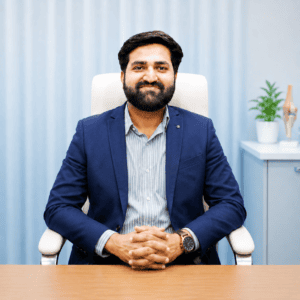
Children with traumatic injuries need quick evaluation and proper care from surgeons experienced in treating pediatric emergencies. Dr. Deepak Jain is a skilled Pediatric Orthopedic Surgeon with experience in managing pediatric trauma, fractures, sports injuries, congenital orthopedic conditions, limb injuries, and other orthopedic problems in children. His approach focuses on careful assessment, appropriate treatment, and helping children recover safely while keeping their comfort and long-term development in mind.
At Alpha Ortho, children receive personalized care based on their age, injury, and overall condition. The clinic provides proper evaluation, advanced diagnostic support, and treatment options for pediatric orthopedic emergencies and injuries. With a child-friendly approach and attention to every stage of recovery, Dr. Deepak Jain aims to provide safe and effective pediatric orthopedic care for children in Mumbai.
The first step is to keep the injured limb as still as possible and avoid letting your child put weight on it. Cold compresses can help with swelling while you arrange a visit. A suspected fracture always needs a proper clinical examination, and in many cases an X-ray, before anyone can confirm what’s actually going on. Dr. Deepak Jain examines the injury, checks for deformity, swelling, and tenderness, and decides whether imaging is required. Early evaluation matters, since it allows fracture treatment to begin without unnecessary delay, which generally supports better healing.
A paediatric orthopaedic surgeon should be consulted whenever there’s severe pain, obvious swelling, a visible deformity, or an inability to move or bear weight on the injured limb. Children’s injuries aren’t always straightforward to judge by appearance alone, and what looks like a sprain can sometimes turn out to be a fracture or a growth plate injury. Dr. Deepak Jain evaluates these cases to understand exactly what’s involved before recommending treatment, which is particularly important given how differently children’s bones respond to trauma compared to adults.
Children’s bones are still growing, which makes them softer, more flexible, and structurally different from adult bone. This means a child fracture can behave in ways an adult fracture wouldn’t, sometimes bending rather than breaking cleanly, or involving the growth plate, an area unique to growing bones. Dr. Deepak Jain takes this into account during every paediatric fracture assessment, since treatment decisions often depend on whether the growth plate is affected and how much growing the child still has left to do.
Growth plates are soft areas of developing tissue found near the ends of a child’s long bones, responsible for the bone’s ongoing growth. A growth plate injury occurs when trauma affects this area, and it needs closer attention than a typical fracture because it can potentially influence how the bone continues to develop. Dr. Deepak Jain assesses the extent of growth plate involvement carefully, as the right management at this stage plays a role in how the bone grows over the following months and years.
No, the majority of childhood fractures heal well with non-surgical treatment such as casting, splinting, or bracing, without ever needing an operation. Whether surgery becomes necessary depends on several factors, including the type of fracture, its location, how displaced the bone is, and whether a joint or growth plate is involved. Dr. Deepak Jain reviews each of these factors individually before advising a family on the most suitable approach, and surgery is only recommended when it’s genuinely the better option for that particular injury.
Healing time isn’t the same for every child, since it depends on factors such as the child’s age, the bone involved, and how severe the fracture is. Younger children often heal faster than older children, purely because of how actively their bones are still growing. During follow-up visits, Dr. Deepak Jain monitors healing progress through examination and, where needed, repeat imaging, so that parents get a realistic sense of recovery timelines rather than a generic estimate that may not apply to their child.
Returning to sports too early after a fracture or sports injury can increase the risk of re-injury, so this decision is best made after a proper assessment rather than a fixed timeline. It depends on how well the bone has healed, the specific joint or limb involved, and the physical demands of the sport itself. Dr. Deepak Jain assesses healing and movement before giving the go-ahead, helping parents understand when it’s genuinely safe for their child to resume training or competitive play.
Yes, follow-up visits are an important part of paediatric fracture care, particularly when a growth plate injury is involved. These visits allow Dr. Deepak Jain to check whether the cast or brace is still fitting correctly, confirm that the bone is healing as expected, and pick up on any concerns early rather than after they’ve become harder to manage. Skipping follow-up care can mean healing problems go unnoticed until later, so these reviews are generally recommended even once the child seems comfortable.

CALL US FOR BOOK AN APPOINTMENT
Looking for an Alpha Ortho clinic near you? We’re closer than you think. Click to explore any of our branches.
Alpha Ortho – Best Pediatric Orthopedic Surgeon in Kandivali
Shiv Krupa Co-op Hsg. Society, SVP Rd, opp. S. V. P. Garden, Kandivali West
Harmony Multi-Speciality clinics, Sant Janabai Rd, Navpada, Vile Parle East
Shiv Mandir Rd, Near kotak mahindra bank, Ramnagar, Dombivli East
Vardhman Market, Sector 17, Vashi, Navi Mumbai
Near Gandhi Hospital, Old Panvel, Panvel
Enter your details here
We’ll be in touch with you shortly