
Clubfoot Treatment Without Surgery: A Case Managed by Dr. Deepak Jain
When parents hear that their baby has clubfoot, it can be an emotional moment. The first thought is often, “Will my baby need surgery?” Parents naturally worry about whether the child will be able to walk normally, whether the foot will remain turned inward, and what treatment will involve.
The good news is that clubfoot can often be corrected with early and appropriate treatment, and surgery is not always required. The treatment plan depends on the child’s age, the severity of the condition and how the foot responds to treatment.
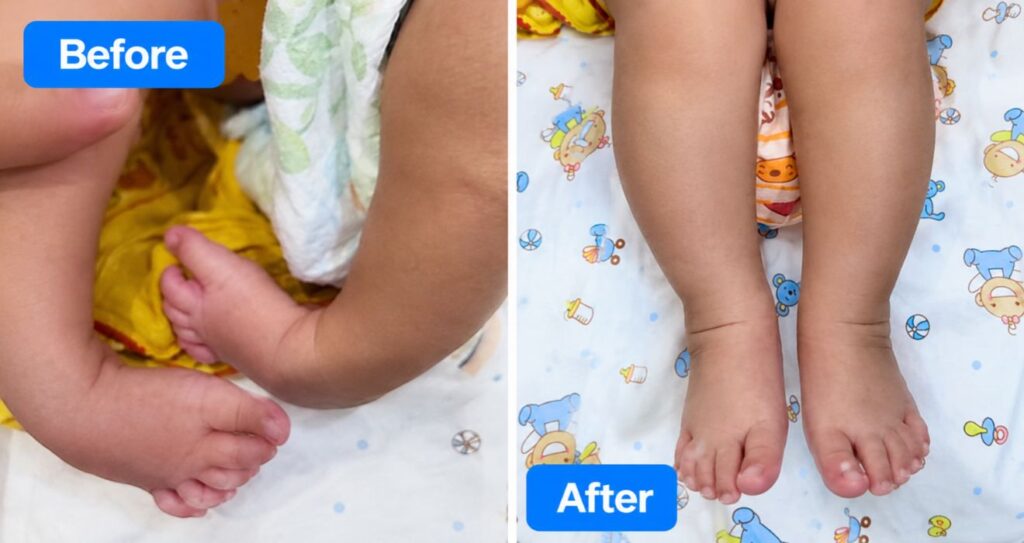
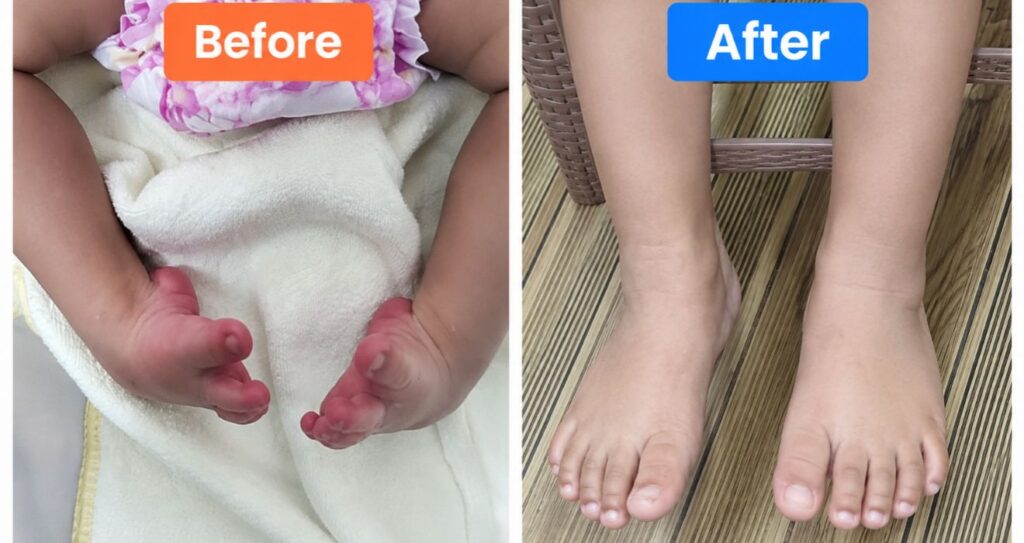
The images above show the before-and-after improvement of a child whose clubfoot was managed without surgery. For parents, seeing such a change can bring a lot of relief and hope.
What Is Clubfoot?
Clubfoot is a condition that is usually present from birth. In a baby with clubfoot, the foot may appear turned inward and downward instead of resting in a normal position.
Sometimes one foot is affected, while in other children both feet may be involved. The appearance can be concerning, especially for new parents, but clubfoot is a condition that can be treated.
One important thing for parents is not to panic or wait for the foot to become normal on its own. Early clubfoot treatment gives the doctor a chance to check the baby’s foot properly and decide the right treatment based on the child’s condition. Starting treatment at the right time can make a big difference as the child grows and begins to stand, walk and play.
Does Clubfoot Always Need Surgery?
No, every child with clubfoot does not need surgery. This is one of the first questions parents usually ask when they are told that their baby has clubfoot.
In many babies, we can start with non-surgical clubfoot treatment. The Ponseti method is commonly used for this. In this treatment, the baby’s foot is gently corrected little by little with a series of casts. The aim is to gradually bring the foot into a better position instead of trying to correct it all at once.
For parents, it is also important to know that treatment may take some time and regular follow-ups are needed. The foot is checked during each visit to see how well it is responding.
Every baby’s clubfoot is a little different. We first look at the baby’s foot carefully and understand the condition, and then decide which treatment will be right for the child. In many cases, clubfoot can be treated successfully without surgery, especially when treatment is started early.
How Is Clubfoot Treated Without Surgery?
The Ponseti method generally involves gentle correction of the foot followed by casting.
The foot is carefully positioned and a cast is placed to help maintain the correction. The cast is changed at regular intervals as the foot gradually moves towards a better position.
For parents, this process can sometimes feel slow. You may not see a dramatic change after the first treatment. But over time, small changes can add up to a significant improvement.
Once the desired correction has been achieved, a brace may be recommended. The brace is an important part of treatment because it helps maintain the corrected position of the foot.
Parents are often surprised to learn that treatment does not simply end once the foot looks straighter. Following the recommended bracing schedule and attending regular follow-ups can be just as important.
A Look at This Clubfoot Case
The before-and-after images here are of a child who was treated for clubfoot without surgery.
In the first image, you can see that both feet were turned inward. After treatment, the position of the feet has improved considerably.
For parents, seeing the before-and-after change can be reassuring. But getting this kind of improvement takes time. The treatment needs to be done properly, and parents also need to follow the advice given during each visit.
Clubfoot can be different for every child. Some babies may need more casts, while others may respond sooner. Bracing is also an important part of treatment in many children and needs to be continued as advised.
So, if your baby has clubfoot, try not to compare their treatment with another child’s. What works for one baby may not be exactly the same for another.
This case is a simple example of how early clubfoot treatment can help improve the position of the foot, and why surgery is not needed for every child.
Why Early Treatment Matters
When parents notice that their baby’s foot is turned inward, it is natural to think, “Maybe it will become normal as the baby grows.” But with clubfoot, it is better to get the baby’s foot checked early rather than waiting.
Starting treatment at the right time can help correct the foot gradually while the baby is still very young. It also gives parents a chance to understand the treatment properly and know what they need to do at home.
Parents often have questions like, “Why does my baby need a cast?” “How many times will we need to come?” or “Will my baby have to wear the brace for a long time?” These are very common concerns. We explain each step to the parents so they know what is being done and how they can take care of their baby at home. Once parents understand how the treatment works and what they need to take care of at home, the whole process becomes much easier to follow.
What Should Parents Look Out For?
Parents are usually the first to notice that something looks different about their baby’s foot. You may notice that the foot:
- Turns inward or downward
- Looks different from the other foot
- Does not seem to rest in a normal position
- Feels stiff or does not move easily
If you notice any of these changes, don’t try to straighten the foot yourself. It is better to have your baby’s foot checked by a Pediatric Orthopedic Surgeon.
We understand that seeing your baby’s foot in an unusual position can be worrying. Getting it checked early can help you understand what is going on and whether your baby needs clubfoot treatment.
Dr. Deepak Jain – Pediatric Orthopedic Surgeon in Mumbai

Dr. Deepak Jain, Pediatric Orthopedic Surgeon at Alpha Ortho, treats children with orthopedic conditions such as clubfoot and focuses on giving parents a clear understanding of their child’s condition and treatment. When a baby is diagnosed with clubfoot, parents naturally have many questions about whether surgery will be needed, how the foot will improve and what they need to do during treatment. Dr. Deepak Jain takes the time to explain these things to parents and guide them through each step of the treatment.
Dr. Deepak Jain consults at Alpha Ortho locations in Kandivali, Vile Parle, Vashi, Panvel, Dombivli and Lalbaug, so parents can visit the location that is convenient for them. If your baby has clubfoot, an early consultation can help you understand the condition, discuss the available treatment options and know whether your child may be suitable for non-surgical clubfoot treatment.
Helping Your Child Take the First Steps With Confidence
Seeing your baby’s foot look different at birth can be worrying, but clubfoot is a treatable condition. With the right care, regular follow-ups and support from parents, many children can achieve good correction.
The case shown above is a reminder that clubfoot does not automatically mean surgery. In suitable cases, treatment can be carried out without surgery, with gradual correction and proper follow-up.
If you have noticed signs of clubfoot in your child, consult Dr. Deepak Jain, Pediatric Orthopedic Surgeon in Mumbai, to understand your child’s condition and the treatment options available.
The images shown are from an individual case managed without surgery. Treatment and results can vary depending on the child’s condition. A Pediatric orthopedc specialist consultation is recommended to decide the appropriate treatment for each child.
Frequently Asked Questions
Can clubfoot be treated without surgery?
Yes, many children with clubfoot can be treated without major surgery. In this case, Dr. Deepak Jain treated the child with a non-surgical approach that included casting and regular follow-ups. Over time, the position of the foot improved. The exact treatment depends on the child’s age, foot position and how the foot responds to treatment.
Is clubfoot painful for babies?
Clubfoot usually does not cause pain in newborn babies. Still, seeing the foot turned inward or downward can be worrying for parents. During a consultation, Dr. Deepak Jain explains the condition to parents and discusses what treatment may be needed for their child.
How long does clubfoot treatment take?
Every child is different, so the treatment time can vary. With the Ponseti method, the foot is gradually corrected using a series of casts. Once the foot reaches a good position, a brace may be recommended to help maintain the correction. Regular follow-ups are also important throughout the treatment.
Can clubfoot come back after treatment?
Yes, clubfoot can sometimes come back even after the foot has been corrected. This is why wearing the brace for the recommended period and attending follow-up visits are important. Parents should also follow the instructions given by Dr. Deepak Jain during and after treatment.
When should parents consult a Pediatric Orthopedic Surgeon?
If you notice that your baby’s foot is turned inward or downward, it is better to get it checked early instead of waiting for it to correct on its own. Dr. Deepak Jain, Pediatric Orthopedic Surgeon, consults in Kandivali, Vile Parle, Vashi, Panvel, Dombivli and Lalbaug. Parents can discuss their child’s condition and understand the treatment options suitable for their child.