

Can Back Pain Be Treated Without Surgery?
Back pain is one of the most common health problems people experience. It can happen after sitting for long hours, lifting something incorrectly, staying in one position for too long, physical activity, an injury, or because of an underlying spine condition.
One of the first concerns many patients have when back pain continues is, “Will I need surgery?”
The answer is not always. Many types of back pain can be treated without surgery, depending on the cause, severity, duration of symptoms, and whether the nerves are affected.
The first step is to understand the reason behind the pain. Once the cause is identified, a spine specialist can guide you towards the treatment that is appropriate for your condition..
What Causes Back Pain?
Back pain can have many different causes. Sometimes it may start after lifting something heavy, exercising, or making a sudden movement. In other cases, it may develop gradually because of prolonged sitting, poor posture, reduced physical activity, or age-related changes in the spine.
Some common causes of back pain include:
- Muscle or ligament strain
- Poor posture and prolonged sitting
- Disc-related problems
- Slipped or herniated disc
- Wear and tear of the spine
- Spinal stenosis
- Sports or other physical injuries
- Nerve compression
The symptoms can also vary. Some people feel pain only in the lower back, while others may have pain that travels into the buttock or leg. Numbness, tingling, or weakness may indicate that a nerve is involved.
This is why the same treatment may not work for everyone with back pain.
How Is Back Pain Treated Without Surgery?
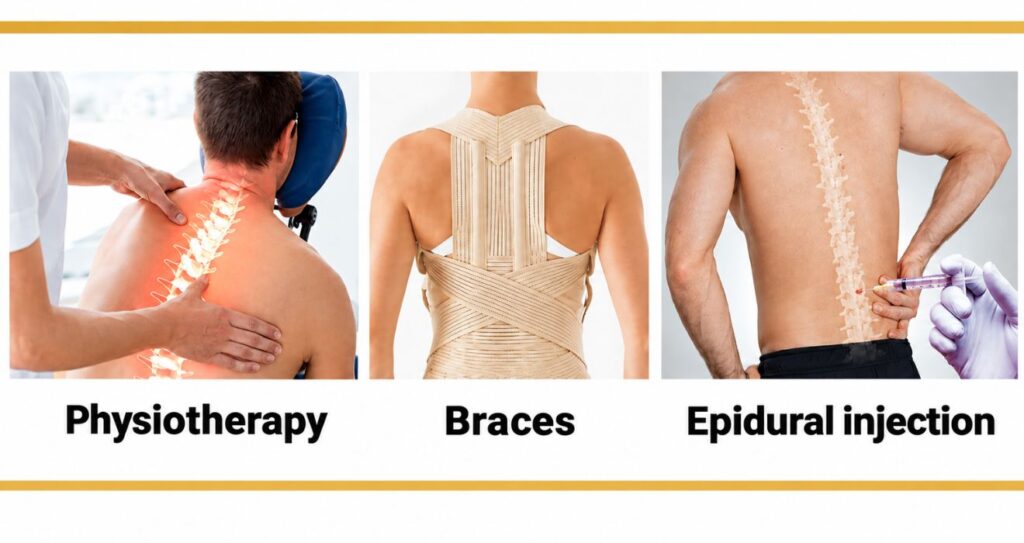
Many people with back pain can begin with non-surgical treatment. The approach depends on the cause of the problem and how it is affecting your everyday activities.
Physiotherapy and Exercise :
Physiotherapy can play an important role in managing many types of back pain. Rather than following the same exercises for everyone, a physiotherapist can recommend movements based on your symptoms, strength, flexibility, and overall condition.
Treatment may include:
- Core and back strengthening exercises
- Flexibility and mobility exercises
- Posture correction
- Improving muscle strength and endurance
- Gradually returning to normal physical activity
The goal is not simply to reduce pain for a short time, but also to improve movement and help you return to your usual activities.
If your back pain is severe or accompanied by numbness or weakness, it is better to seek medical advice before starting exercises on your own.
Medicines :
A doctor may recommend medicines to help manage pain or inflammation when appropriate.
The choice depends on factors such as the cause of your pain, your medical history, existing health conditions, and other medicines you may be taking. It is therefore important to take medicines only as advised by your doctor.
Your daily routine can have an effect on your back. Sitting continuously for several hours, working at an unsuitable desk, or lifting objects incorrectly can place additional strain on the spine. These daily habits can also contribute to back pain in young adults.
Some simple changes can help support better back health:
- Take regular breaks if you sit for long periods
- Keep your workstation comfortable and properly arranged
- Avoid staying in the same position for too long
- Stay physically active
- Use proper technique when lifting objects
- Maintain a healthy body weight where appropriate
- Increase exercise gradually
Your sitting and sleeping habits can also affect your back. For some people, an uncomfortable sleeping position or poor sleeping posture can contribute to back pain after sleeping.
These changes may be particularly helpful when they are combined with a treatment plan suited to your condition.
Injections and Other Minimally Invasive Treatments :
For some spinal conditions, a specialist may recommend a targeted injection or another minimally invasive treatment.
These procedures are not required for everyone. They may be considered for selected patients depending on the source of the pain, examination findings, and response to other treatments.
Our spine specialist can explain whether such an option is suitable for your condition.
When Might Back Pain Require Surgery?
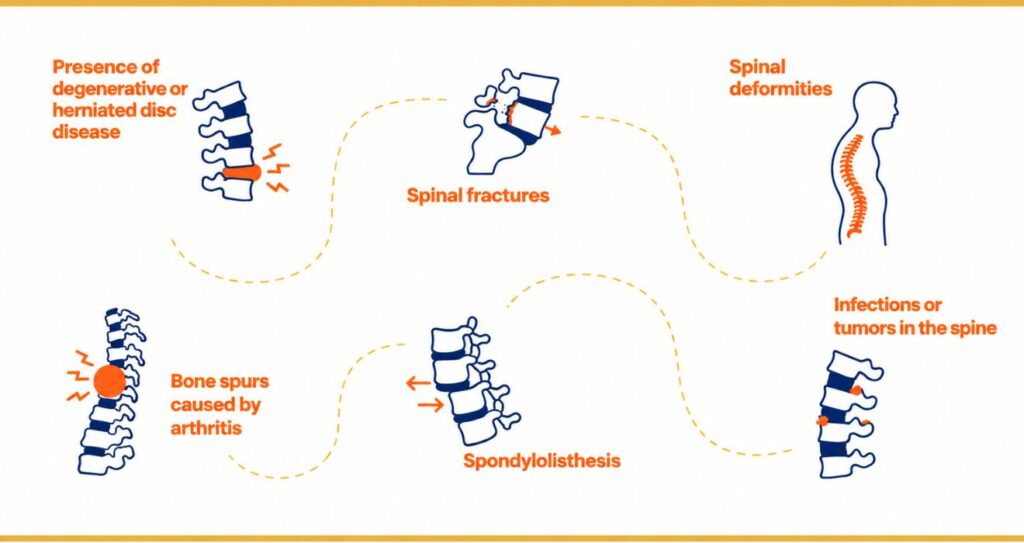
Surgery is not the first treatment for every person with back pain. However, there are situations where it may be considered.
A spine specialist may discuss surgery when there is significant nerve compression, certain structural problems in the spine, progressive neurological symptoms, or persistent symptoms that have not improved adequately with appropriate non-surgical treatment.
The decision is based on more than the presence of back pain alone. Your symptoms, examination findings, imaging reports, general health, and response to previous treatment all matter.
When Should You See a Back Pain Doctor Immediately?
Back pain with certain symptoms needs medical attention sooner rather than later. It is important to see a doctor if you have:
- Weakness in your leg that is getting worse
- Numbness that is increasing or spreading
- Trouble controlling your bladder or bowel movements
- Severe back pain after a major injury or accident
- Back pain along with fever or unexplained weight loss
If you notice any of these symptoms, don’t wait for the pain to settle on its own. Our doctor can check your symptoms and determine whether you need further evaluation or treatment.
How Does a Spine Specialist Decide Whether Surgery Is Needed?
At Alpha Ortho Clinic, our spine specialists do not decide on surgery based on an MRI report alone. Our doctor first looks at your symptoms, examines you, and understands how the back problem is affecting your daily life.
Medical History
Our doctor will ask when the pain started and how it has changed over time. We will also ask if the pain stays in the back or goes into the buttock or leg.
If you have numbness, tingling, or weakness, it is important to mention these symptoms. Our doctor will also ask about any previous injury and treatment you have already taken.
Physical Examination
Our doctor will examine your back and check your movements. We may also check your muscle strength, reflexes, and sensation.
This helps our doctor understand where the pain may be coming from and whether there are signs of nerve involvement.
Neurological Assessment
Back pain with leg pain, numbness, tingling, or weakness can sometimes be related to a nerve problem.
Our spine specialist will check the nerves carefully to see if there is any sign of irritation or compression.
Imaging When Needed
An X-ray or MRI is not required for every case of back pain. Our doctor may suggest an imaging test when it is needed to understand the problem better.
An MRI can show changes in the discs, nerves, and other parts of the spine. But seeing a change on an MRI does not automatically mean that surgery is needed.
An MRI finding alone does not always mean that surgery is required. The decision is based on the patient’s symptoms, examination, imaging, and overall condition.
Response to Previous Treatment
Our doctor will also ask what treatment you have already tried and whether it helped.
If medicines, physiotherapy, exercises, or other non-surgical treatments have not helped enough, our spine specialist may discuss other options with you.
Overall Health and Daily Limitations
Our doctor will also consider your general health and how the back problem is affecting your routine.
For example, difficulty walking, standing, working, sleeping, or doing everyday activities can be important when deciding on the next step.
After looking at all these factors, our spine specialist can explain whether you can continue with non-surgical treatment or whether another treatment option needs to be considered.
How Long Does Back Pain Take to Improve Without Surgery?
There is no fixed recovery time for back pain. Some types of back pain may settle relatively quickly, while other conditions can take longer to improve. Recovery depends on factors such as the underlying cause, severity and duration of symptoms, activity level, and response to treatment.
If your pain continues for a prolonged period, keeps returning, or starts affecting your sleep, work, walking, or daily activities, it is worth getting it evaluated by a medical professional.
How Can You Avoid Back Pain Again?
Not every type of back pain can be prevented, but some everyday habits can help reduce the chances of recurring problems.
Regular physical activity can help maintain strength and flexibility. Strengthening the core and back muscles can also support better movement.
Other useful habits include:
- Avoiding prolonged sitting
- Taking movement breaks during work
- Maintaining good posture
- Using proper lifting techniques
- Staying physically active
- Maintaining a healthy body weight
- Increasing exercise gradually
If you have recently recovered from back pain, avoid suddenly returning to strenuous exercise. Give your body time to adjust as you increase your activity.
When Should You See a Spine Specialist for Back Pain?
Not every episode of back pain needs specialist care. However, persistent, recurring, or worsening symptoms should be evaluated.
You should consider consulting a spine specialist if:
- Your back pain continues or keeps returning
- Pain travels from your back into your leg
- You experience numbness or tingling
- You notice weakness in your leg
- You have difficulty walking or standing
- Your pain is affecting your sleep or daily activities
- Your symptoms are getting worse
- Your back pain started after an injury
A spine specialist evaluation can help identify the possible cause of your symptoms and determine whether you may benefit from physiotherapy, medicines, lifestyle changes, minimally invasive treatment, or surgery.
Back Pain Treatment at Alpha Ortho Clinic
At Alpha Ortho Clinic, patients with back and spine-related concerns can be evaluated by our spine specialists to understand the possible cause of their symptoms.
Treatment is planned according to the patient’s condition rather than following a one-size-fits-all approach. Depending on the diagnosis and severity of symptoms, treatment may include non-surgical care, physiotherapy, minimally invasive procedures, or surgery when medically appropriate.
Our spine specialists evaluate the symptoms, clinical findings, and relevant investigations before discussing treatment options with the patient. This helps patients understand their condition and make informed decisions about their care.
Alpha Ortho Clinic has locations at:
Kandivali | Vile Parle | Vashi | Panvel | Dombivli | Lalbaug
If you have persistent or recurring back pain, an evaluation by a spine specialist can help you understand the possible cause of your symptoms and the treatment options that may be appropriate for you.
Conclusion
Back pain does not automatically mean that surgery is necessary. Many people can be treated with non-surgical approaches such as physiotherapy, exercise, lifestyle changes, and medicines when appropriate.
At the same time, some spinal conditions may require surgery, particularly when there is significant nerve involvement or when appropriate non-surgical treatment has not provided enough improvement.
The important first step is to understand what is causing your back pain. A proper evaluation by a spine specialist can help identify the problem and guide you towards the treatment that is appropriate for your condition.
Consult a Spine Specialist for Persistent Back Pain
If your back pain is continuing, coming back often, or affecting your daily activities, it is worth getting it checked.
At Alpha Ortho Clinic, our spine specialists can assess your symptoms, find the possible cause of the pain, and explain the treatment options available. Depending on your condition, treatment may include non-surgical care or other treatment options.
Consult our spine surgeons at Alpha Ortho Clinic to understand what may be causing your back pain and what treatment may be suitable for you.
Frequently Asked Questions
Is surgery always needed for back pain?
No. Many types of back pain can be managed without surgery. The appropriate treatment depends on the cause, severity of symptoms, nerve involvement, and response to non-surgical treatment.
Can a slipped disc be treated without surgery?
Some patients with a slipped or herniated disc improve with non-surgical treatment. The appropriate approach depends on the symptoms, examination findings, and degree of nerve involvement.
Should I get an MRI for back pain?
Not everyone with back pain needs an MRI. A doctor may recommend an MRI when it is appropriate based on your symptoms, examination, duration of pain, or suspected spinal condition.
Can physiotherapy help with back pain?
Physiotherapy can be helpful for many types of back pain. A physiotherapist can recommend exercises and rehabilitation based on your specific condition and physical ability.
When should back pain be treated urgently?
Back pain accompanied by worsening weakness, loss of bladder or bowel control, or severe pain following significant trauma requires prompt medical evaluation.