
Sciatica Specialist Doctor in kandivali
A sharp or burning pain that starts in the lower back or buttock and travels down the leg can make even simple activities difficult. Sitting for long periods, walking, climbing stairs or sleeping may become uncomfortable. Some people also experience tingling, numbness or weakness in the leg.
These symptoms may be related to sciatica, a condition caused by irritation or pressure on the sciatic nerve. If the pain continues or starts affecting your daily life, consulting a Sciatica Specialist Doctor in Kandivali can help identify the actual cause and guide you towards appropriate treatment.
What Is Sciatica?
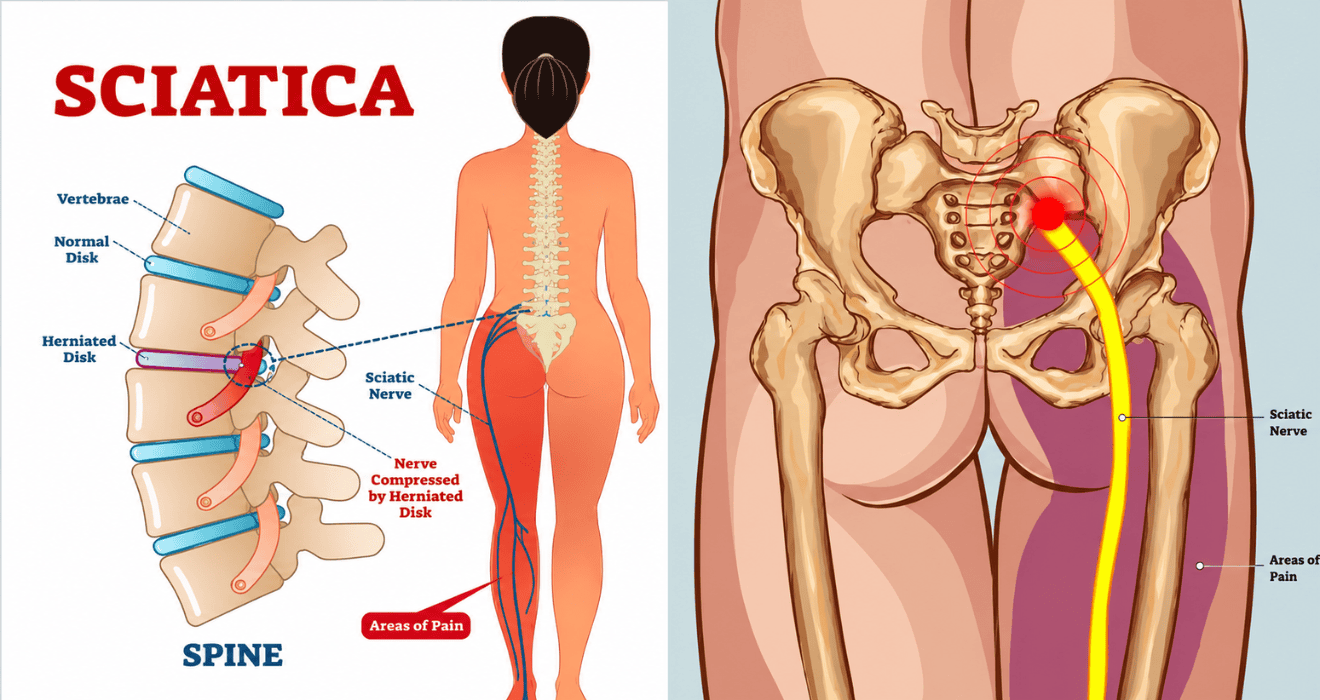
The sciatic nerve is the largest nerve in the body. It begins in the lower part of the spine and travels through the buttock and down each leg. When this nerve becomes irritated or compressed, it can cause symptoms known as sciatica.
Sciatica commonly affects one side of the body. The pain may start in the lower back or buttock and travel down the back or side of the thigh and leg. Along with pain, some patients may experience tingling, numbness or weakness in the affected leg.
The severity of symptoms can vary. For some people, the pain may improve with appropriate treatment and time. In other cases, persistent nerve compression may require further evaluation by a spine specialist to determine the right approach to sciatica pain treatment.
What Causes Sciatica?
Sciatica is usually related to a problem in the lower spine that affects the nerve roots forming the sciatic nerve.
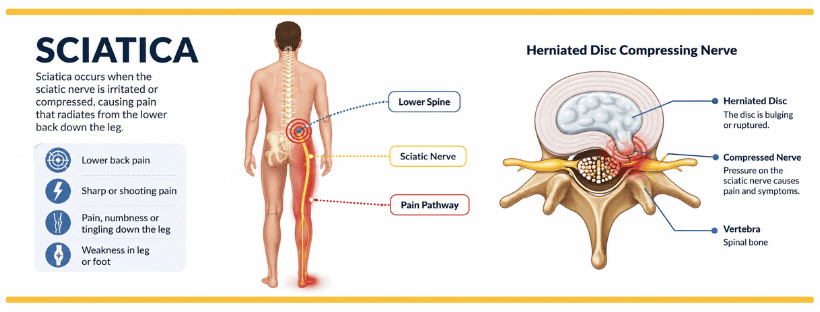
A slipped or herniated disc is one of the common causes. The soft inner part of a spinal disc may bulge or move out of its normal position and press against a nearby nerve. This can lead to pain that travels from the lower back into the leg.
Other possible causes include narrowing of the spinal canal, known as spinal stenosis, and bone spurs that develop due to changes in the spine. Age related changes in the discs and joints of the spine can also contribute to nerve irritation.
Identifying the exact cause is important because treatment depends on the condition affecting the nerve.
What Are the Symptoms of Sciatica?
Sciatica symptoms can be different for each patient. Common symptoms include pain that travels from the lower back or buttock into the leg, burning pain, tingling and a pins and needles sensation.
Some people may also notice numbness in the leg or foot. Weakness can make it difficult to walk normally or perform certain movements. Symptoms may become more noticeable after sitting, standing, coughing or certain movements, depending on the cause of nerve irritation.
Persistent pain, increasing numbness or weakness should not be ignored. These symptoms may indicate that the nerve is continuing to be affected and require a proper medical evaluation.
How Is Sciatica Diagnosed?
Spine X-rays or CT Scans: Provide initial views of bone structures for detecting structural issues.
MRI Scans: Offer detailed images of soft tissues, spinal nerves and their structure, aiding in the diagnosis of herniated discs, spinal stenosis and other soft tissue abnormalities.
Nerve Conduction Velocity Studies (NCV): Assess nerve function by measuring the speed of electrical impulses, aiding in the identification of nerve compression or damage.
Electromyography (EMG): Measures muscle response to nerve signals, helping diagnose conditions affecting the nerves and muscles.
Physical Examination: Checks reflexes, muscle strength and walking pattern to identify signs of nerve irritation or weakness.
Straight Leg Raise Test: Involves lifting the affected leg while lying down to reproduce pain and confirm sciatic nerve involvement.
When Should You See a Sciatica Specialist Doctor in Kandivali?
Mild sciatica symptoms may sometimes improve, but continuing or worsening symptoms should be assessed by a doctor. You should consider consulting a spine specialist if pain continues for several days or weeks, becomes more intense or starts interfering with work, sleep, walking or other daily activities.
Medical evaluation is also advisable if you develop increasing numbness or weakness in the leg. Severe weakness or new changes in bladder or bowel control require urgent medical attention.
A Sciatica Specialist in Kandivali can assess your symptoms, examine your spine and nerves and determine whether further investigations are needed.
Sciatica Treatment in Kandivali
Sciatica treatment depends on the cause, severity and duration of symptoms. Many patients may initially be treated without surgery. Depending on the diagnosis, treatment may include appropriate medication, physiotherapy, activity modification and advice regarding posture and daily movements.
Selected spine interventions may also be considered when appropriate. The aim is to address the source of nerve irritation and help the patient return to normal activities safely.
There is no single treatment approach that is suitable for every patient. A treatment plan should be based on the symptoms, clinical examination and diagnosis rather than using the same method for everyone.
Medications :
Over-the-Counter Pain Relievers: Common pain relief medicines, including NSAIDs, can help ease pain and swelling.
Muscle Relaxants: Doctors may prescribe these in some cases to relax tight muscles and reduce spasms.
Physical Therapy :
Specific Exercises and Stretches: Simple guided exercises help improve flexibility and strengthen your back and core muscles.
Manual Therapy: Hands-on techniques like massage or gentle spinal adjustments can help ease discomfort.
Injections :
Epidural Steroid Injections: A steroid medicine is injected near the affected nerve to reduce swelling and give short term pain relief.
Surgery :
Microdiscectomy: A minor surgery to remove the part of the disc pressing on the sciatic nerve and relieve pain.
Laminectomy: A surgery that removes a small part of bone to create more space for the nerve and reduce pressure.
Sciatica Specialists at Alpha Ortho in Kandivali
Patients experiencing sciatica symptoms can consult the spine specialists at Alpha Ortho in Kandivali for evaluation and an appropriate treatment plan.
Dr. Yogin Patel

Dr. Yogin Patel is a Consultant Minimally Invasive and Endoscopic Spine Surgeon with expertise in endoscopic, minimally invasive and complex spine surgery. His clinical interests include complex spine conditions and advanced endoscopic procedures.
Dr. Gaurav Ranglani

Dr. Gaurav Ranglani is a Consultant Endoscopic Spine and Orthopaedic Surgeon with expertise in spine disorders, endoscopic spine surgery, minimally invasive spine care and interventional pain management. His clinical work includes lumbar disc problems, degenerative spine conditions and other conditions that may contribute to nerve compression.
Both specialists assess patients based on their symptoms and diagnosis before discussing suitable treatment options.
Conclusion
Pain that travels from the lower back or buttock into the leg may be more than ordinary back pain. Persistent radiating pain, numbness, tingling or weakness can sometimes indicate irritation or compression of a spinal nerve.
If these symptoms continue or interfere with your daily life, seeking a proper medical evaluation is a sensible step. Patients looking for a Sciatica Specialist Doctor in Kandivali can consult the spine specialists at Alpha Ortho for an assessment of their condition and guidance on suitable treatment options.
Frequently Asked Questions
1. Where can I get sciatica treatment in Kandivali?
Ans –
If you are looking for sciatica treatment in Kandivali, Alpha Ortho provides evaluation and treatment for patients experiencing sciatic nerve pain. You can consult Dr. Yogin Patel or Dr. Gaurav Ranglani to understand the cause of your symptoms and discuss suitable treatment options based on your condition.
2. Can sciatica go away on its own?
Ans –
Yes, mild cases of sciatica may improve with time, rest and simple changes in daily activities. However, recovery depends on what is causing the irritation or pressure on the sciatic nerve. If the pain continues, keeps coming back or starts affecting your daily activities, it is better to consult a specialist to understand the cause.
3. When should I see a sciatica specialist?
Ans –
You should consult a sciatica specialist if the pain continues for more than a few days, becomes severe or makes it difficult to sit, walk or sleep comfortably. Numbness, tingling or weakness in the leg should also be evaluated by a doctor. Dr. Yogin Patel and Dr. Gaurav Ranglani at Alpha Ortho, Kandivali, can assess the cause of your symptoms and guide you about suitable treatment options.
4. Can physiotherapy help with sciatica?
Ans –
Yes, physiotherapy can help many people with sciatica. Specific exercises can improve flexibility, strengthen the muscles supporting the spine and help reduce strain on the affected nerve. The treatment plan depends on the cause of sciatica, so exercises should be performed under proper guidance.
5. Is surgery always required for sciatica?
Ans –
No, surgery is not always required for sciatica. Many patients improve with medicines, physiotherapy, posture correction and other non surgical treatments. Surgery may be considered when pain continues despite appropriate treatment or when there is significant nerve compression, weakness or other serious symptoms.
6. Can sciatica cause permanent nerve damage?
Ans – Sciatica does not usually cause permanent nerve damage, especially when the underlying cause is identified and treated appropriately. However, prolonged or severe pressure on a nerve can sometimes lead to lasting weakness or other problems. If you experience increasing weakness, severe numbness or difficulty moving the leg, you should seek medical attention without delay.
7. Can sciatica come back after treatment?
Ans – Yes, sciatica can return in some cases. This may happen if the original cause remains or the back is repeatedly exposed to strain. Maintaining good posture, staying physically active, following recommended exercises and using proper techniques while lifting can help reduce the risk of the pain coming back.